Taphonomic Hearth Stones


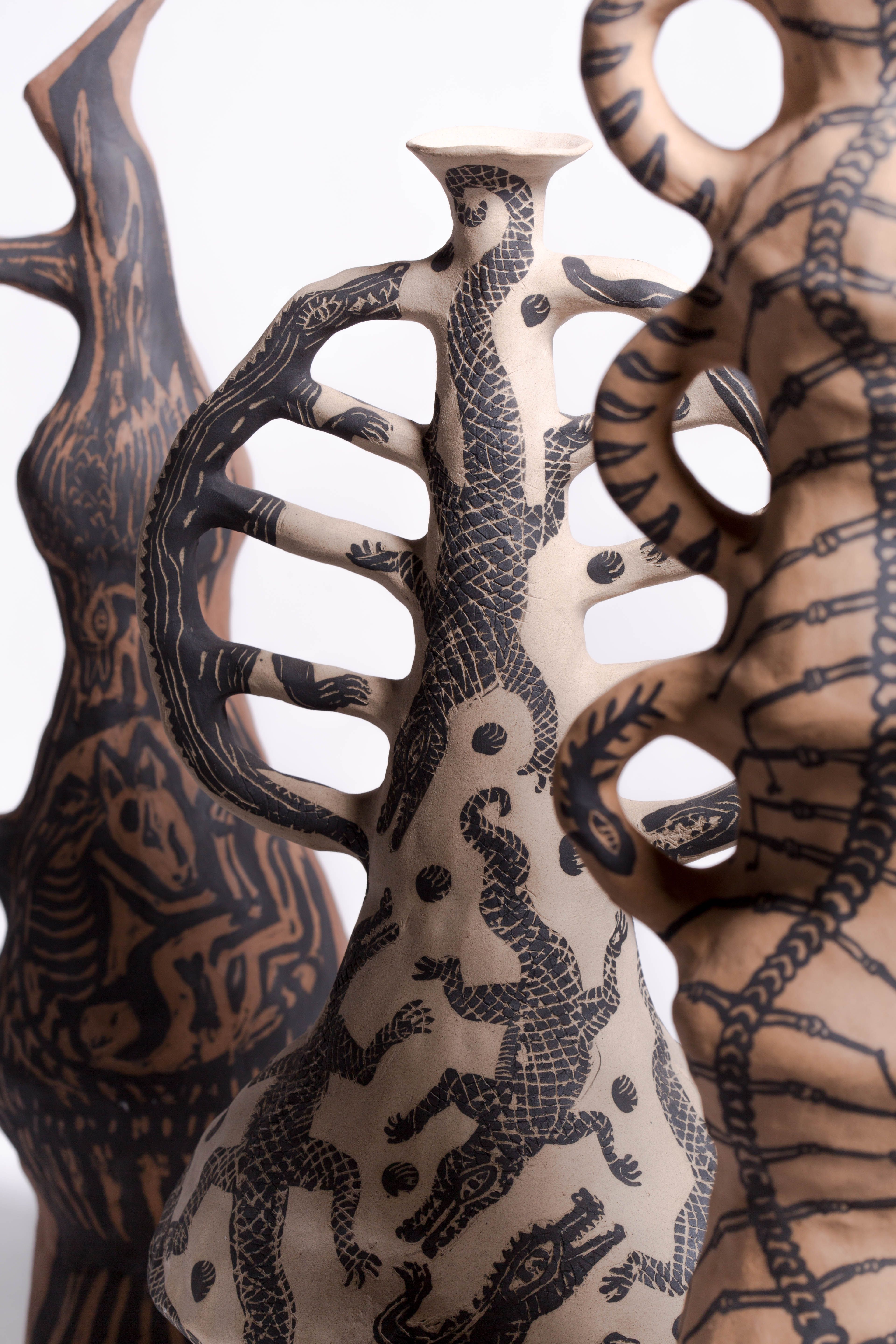

The Taphonomic Hearth Stones series explores the study of taphonomy and its relationship with humans, fire, and soil. Taphonomy investigates how organic remains transition from the biosphere to the lithosphere through burial, decomposition, and mineralization into fossils or other stable biomaterials. This slow process, often unnoticed, serves as a metaphor for how our personal narratives transform from our psyche to the truths we embody. By delving into this concept, we become more mindful of the formation of fossils and stable biomaterials that shape our perception of self. As a ceramic artist I am fascinated by the process of malleable clay becoming a solid object and how this parallels with repeated narratives shaping our emotional landscapes.
Ritual vessels reminiscent of primitive domestic items, such as vases and pitchers, symbolize the tradition of sharing stories around a campfire signifying not only physical sustenance, but also the intangible and immaterial connections that sustain our relationship with life.
Taphonomic Hearth Stones encourages viewers to contemplate the beauty of pliable memories and the role of shared narratives in shaping our perception. The exhibition invites us to consider how the fossils and stable biomaterials of our own psyche exist as evidence of our past and remind us of the subtle forces that shape us over time.
Volcanic Series


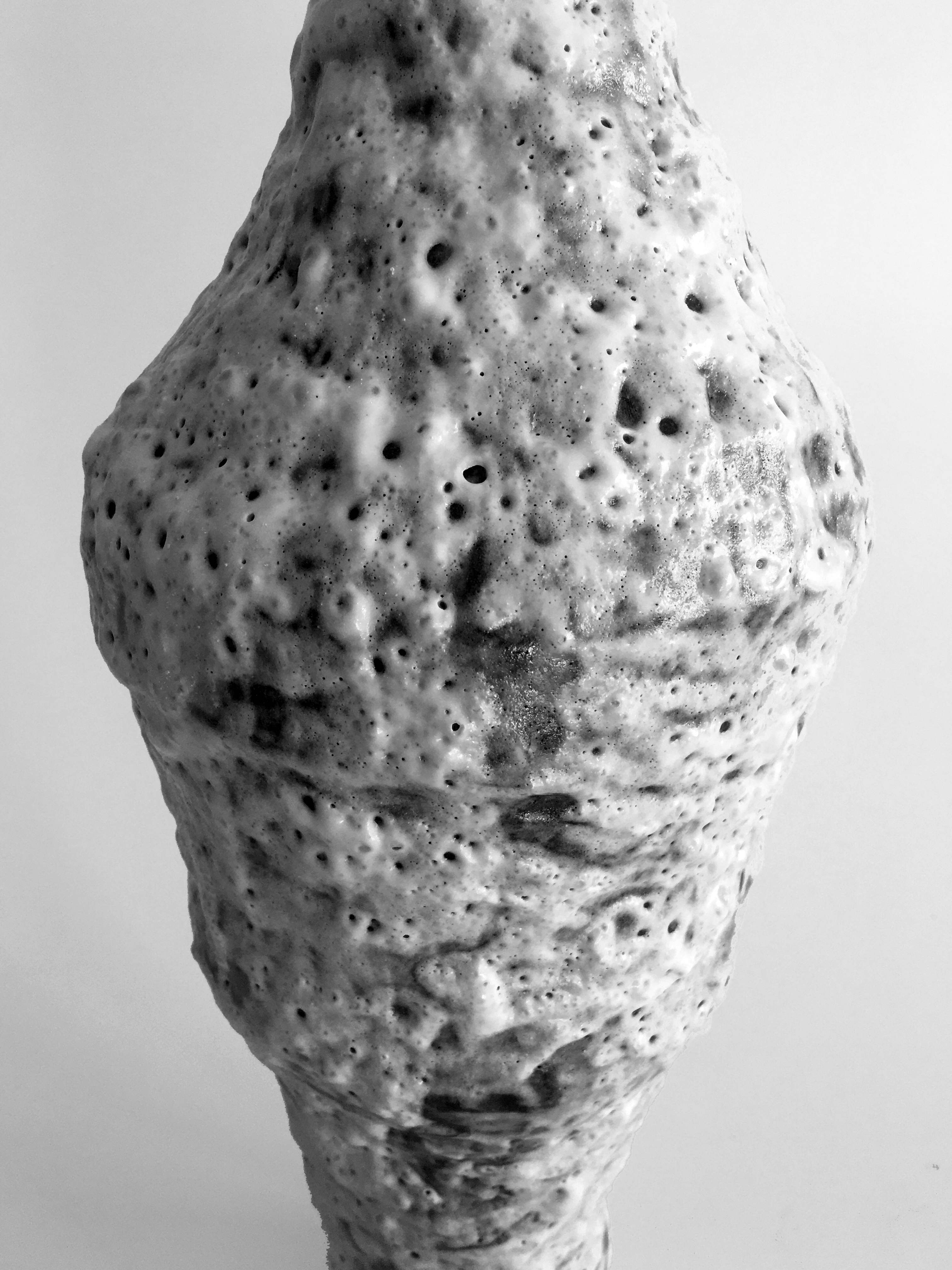
I was inspired by the history of volcanic glazes which create ceramic vases imbued with growths reminiscent of time-encrusted relics. The thick, encrusted glazes of the 1960s and ’70s, known as 'fat lava,' evoke the raw power and beauty of nature, reminding us of the importance of embracing the imperfections and irregularities that make each piece one-of-a-kind.
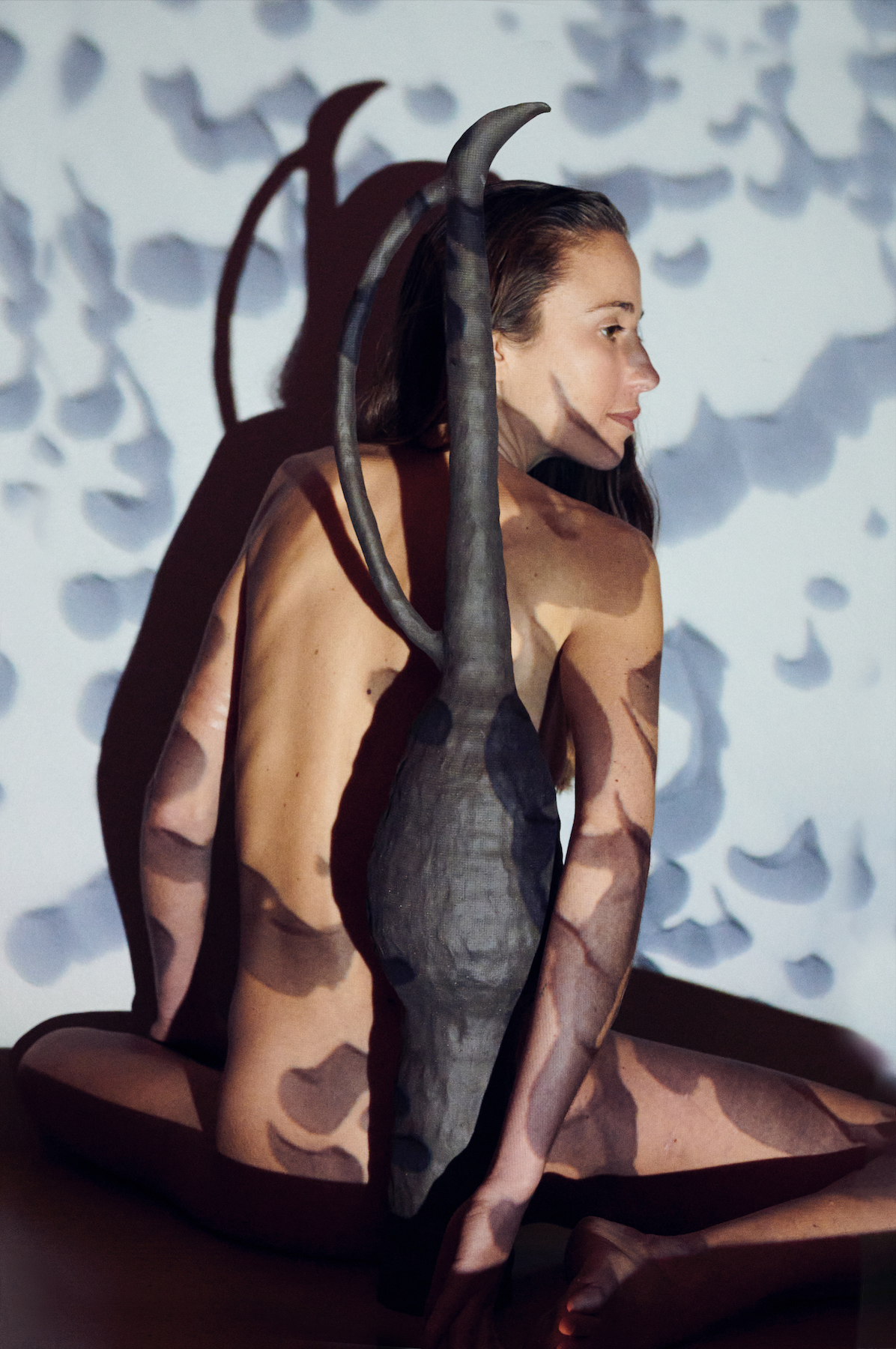
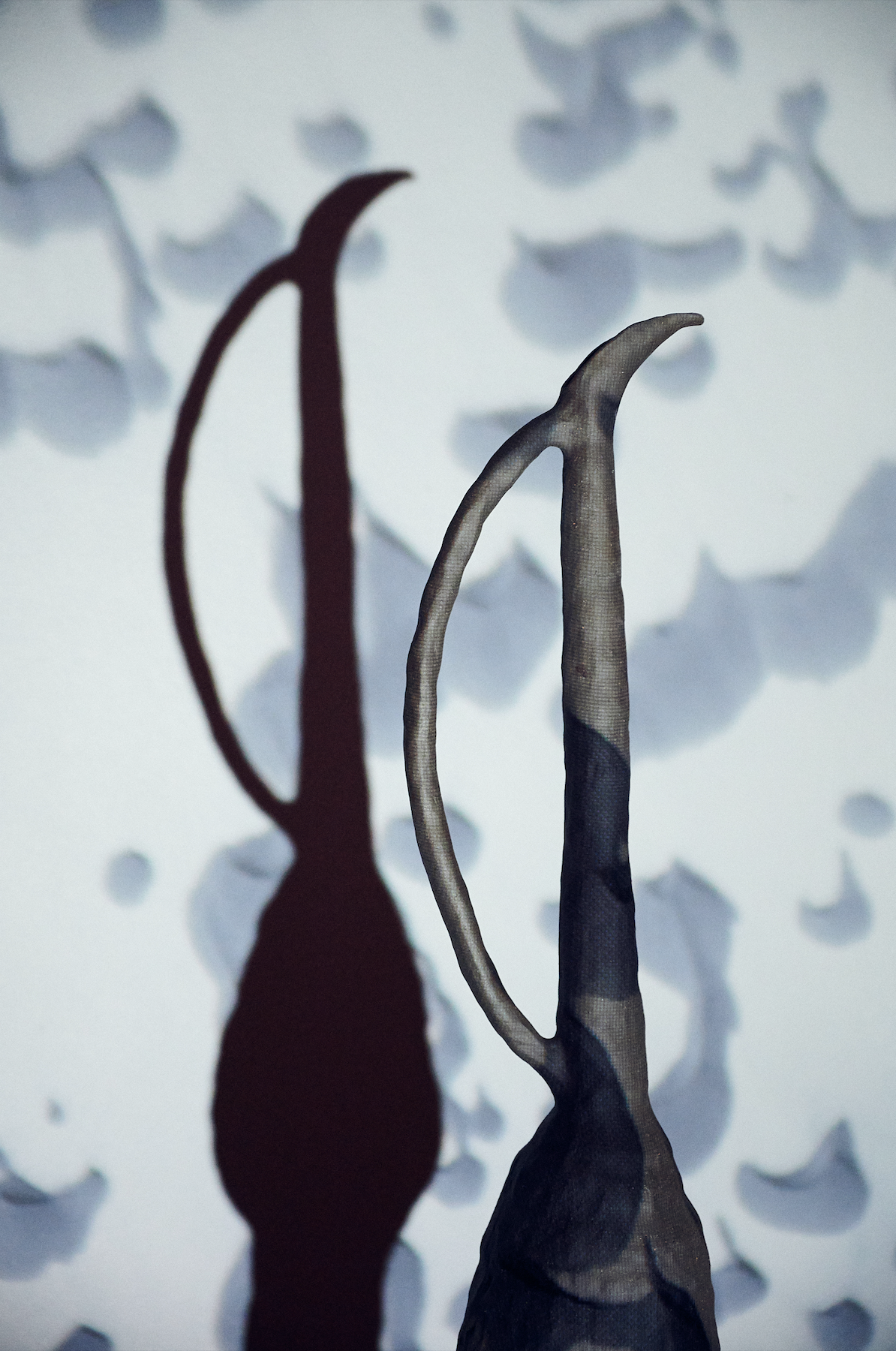
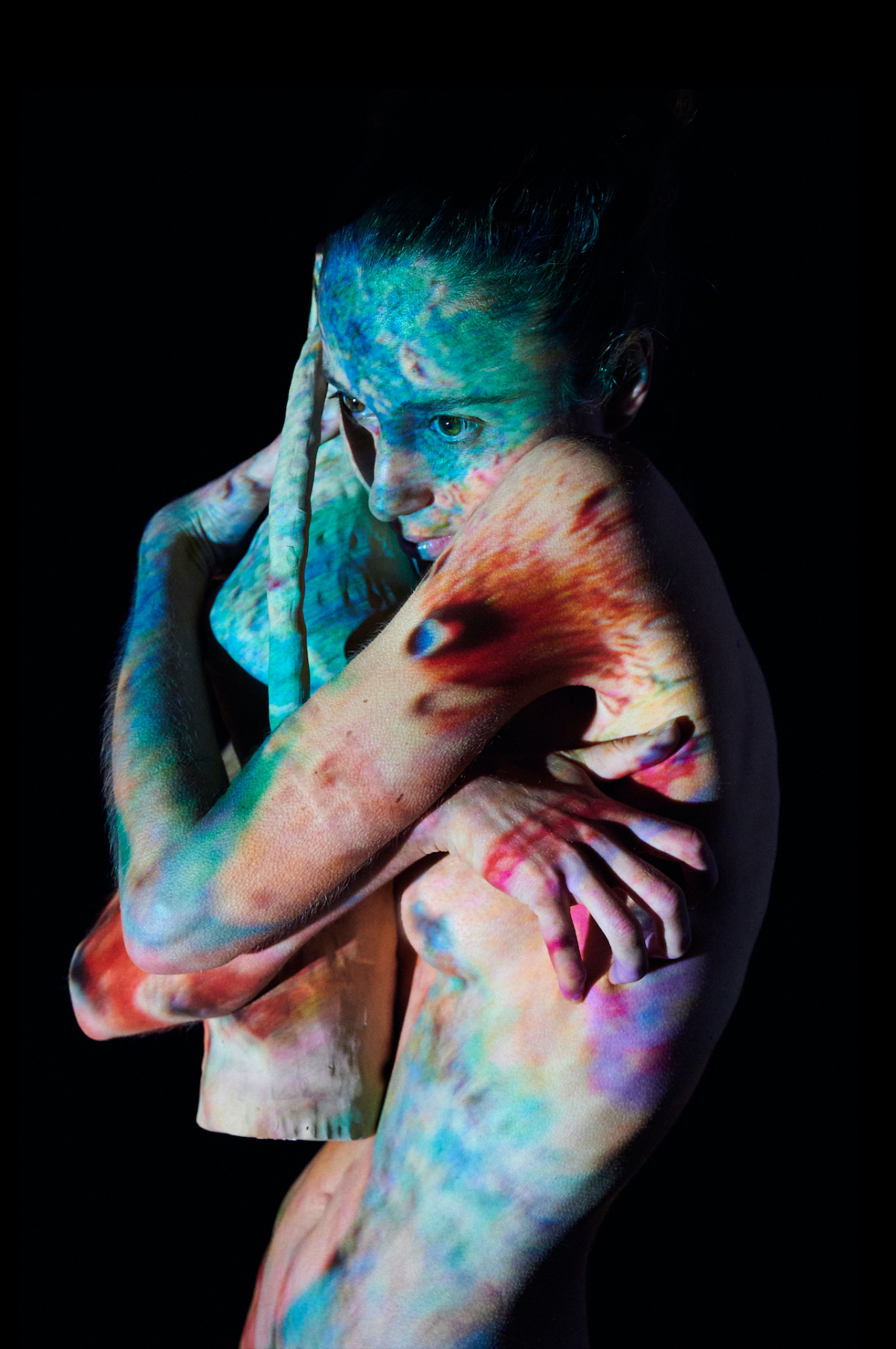
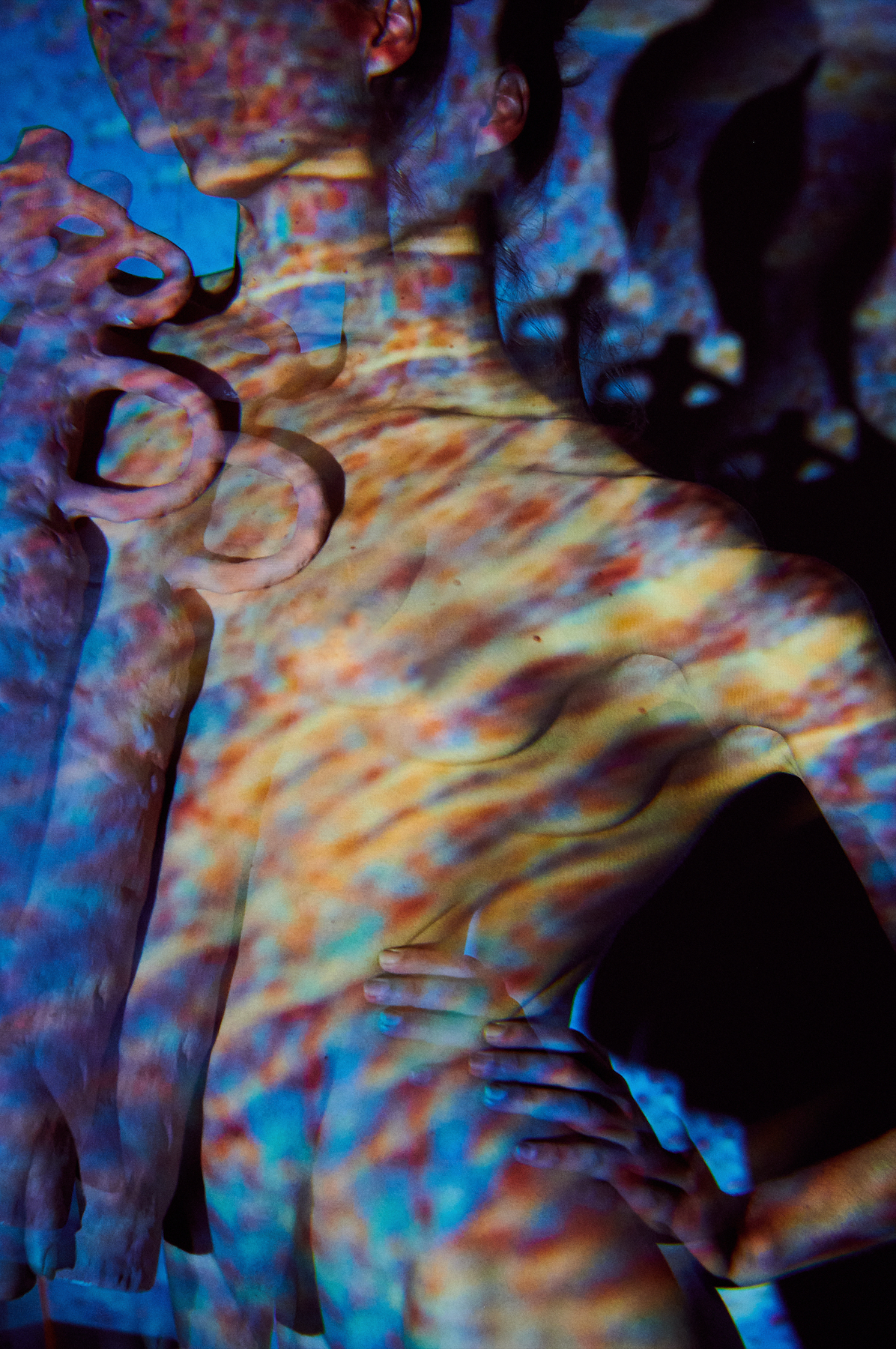
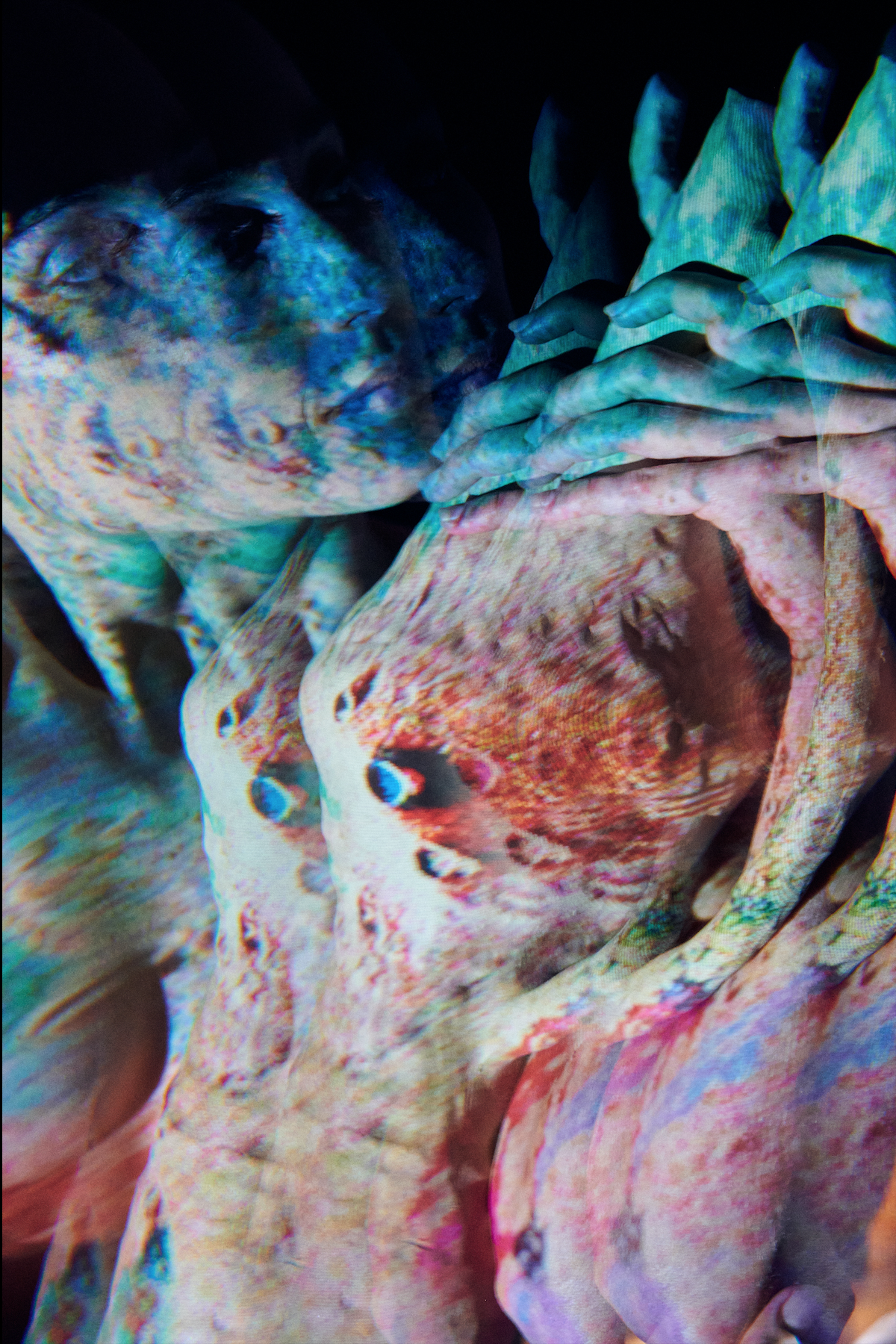
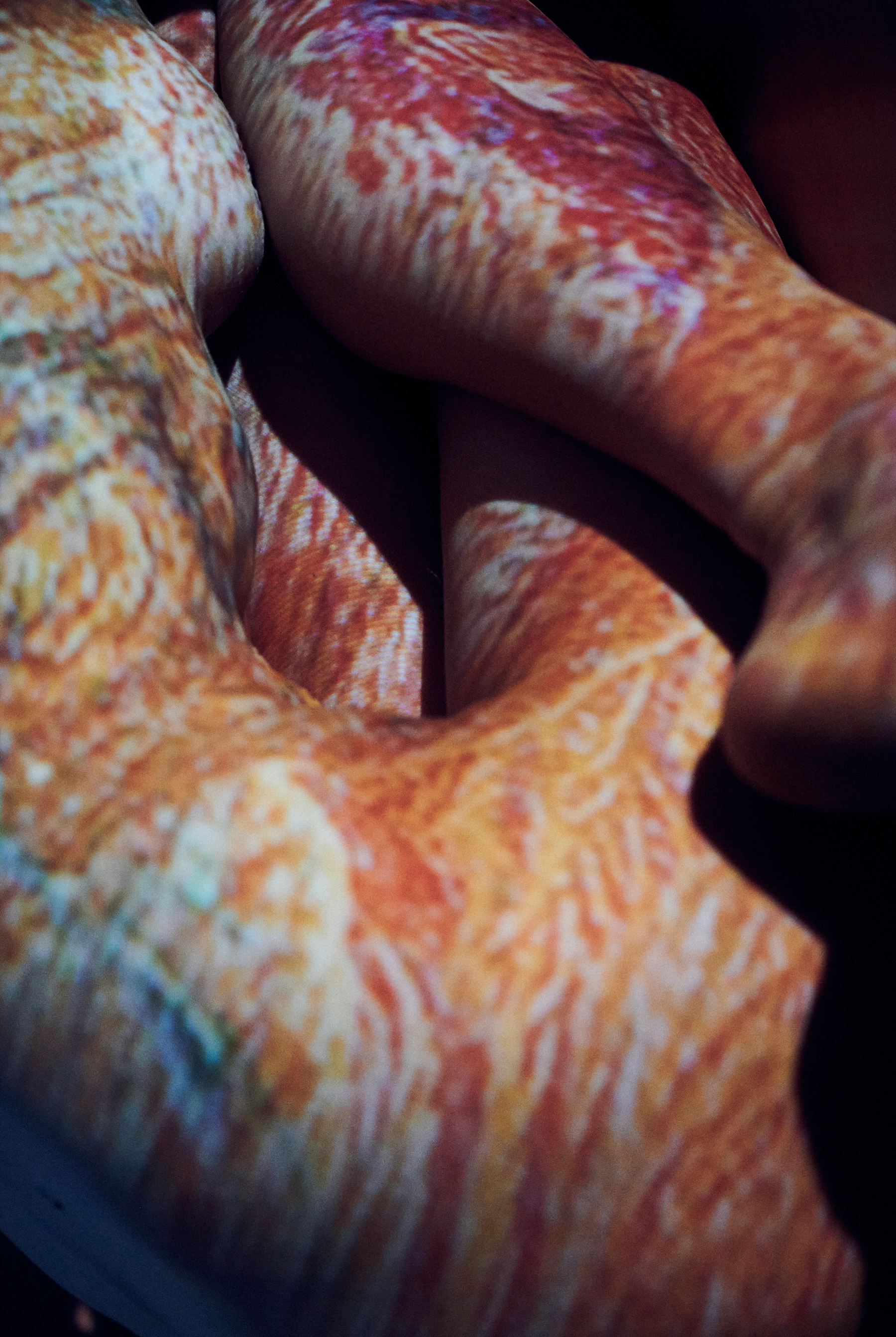
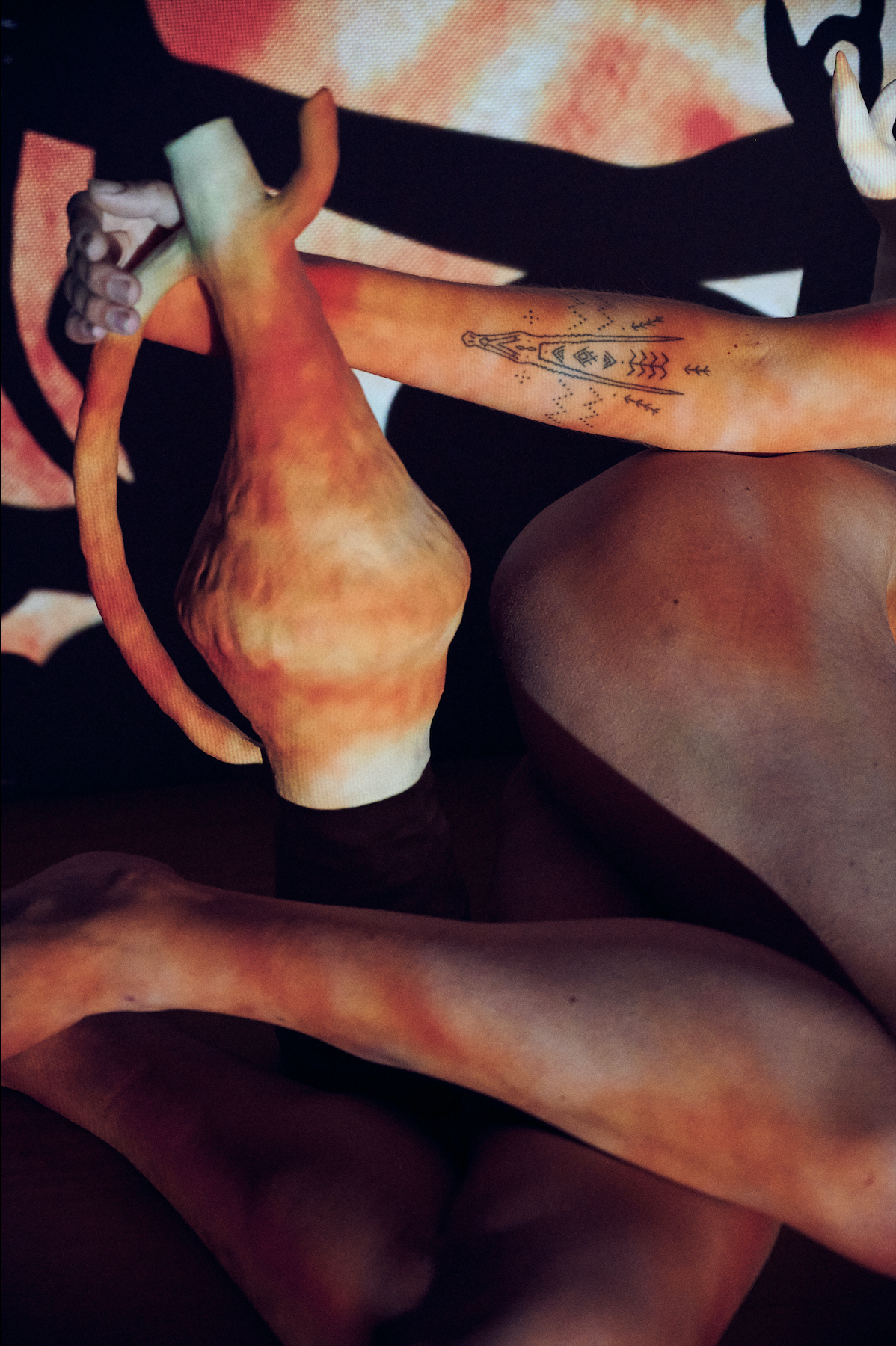
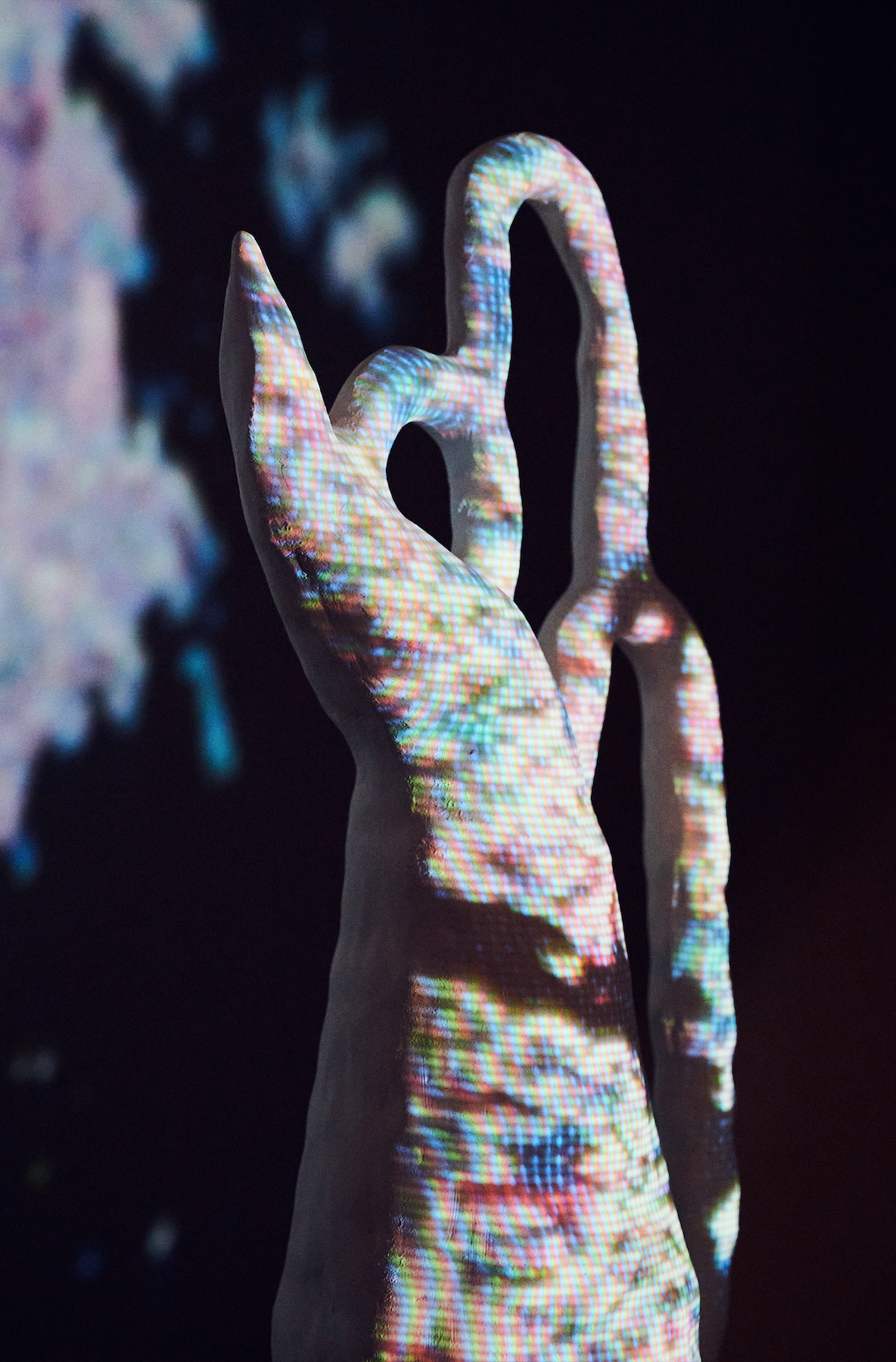
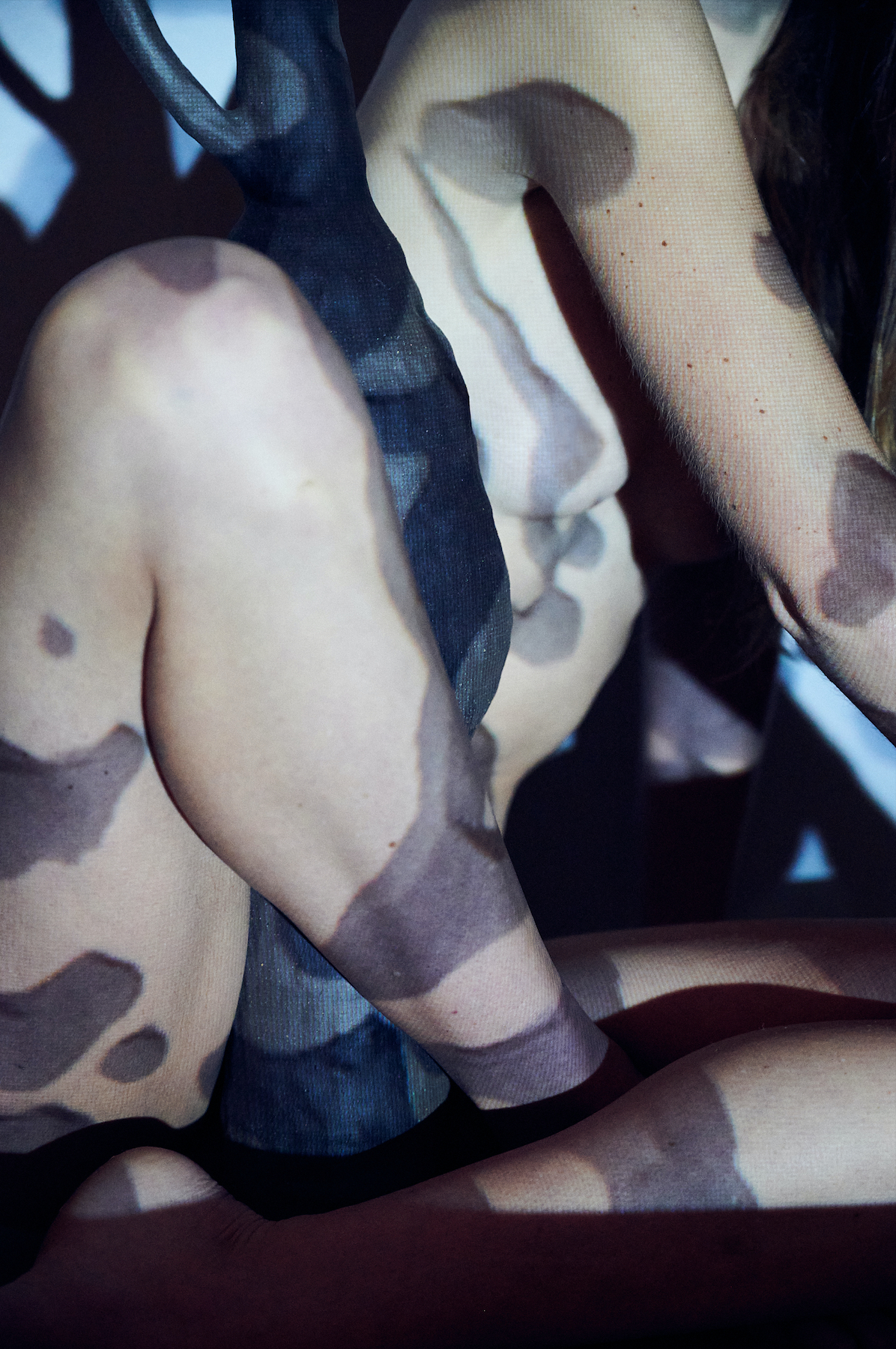
The Satellite series, a collaborative portrait project by Michael Goldsmid and myself, reimagines the classic trope of the female nude in nature. By using a crystal prism to project NASA radar imagery onto the human form, we create a dialogue between the biological body and the technological gaze.
As technology increasingly stakes a claim on our psyche, the agency of the individual begins to shift. This series explores that tension, using the nude alongside clay vessels—primal symbols of human creation—interrupted by refractions of data from space.
Ultimately, these works prompt a contemplation of our "departure points" from the physical world. The series was first exhibited in Hanoi, Vietnam, as part of a festival exploring the human body as a political landscape.
As technology increasingly stakes a claim on our psyche, the agency of the individual begins to shift. This series explores that tension, using the nude alongside clay vessels—primal symbols of human creation—interrupted by refractions of data from space.
Ultimately, these works prompt a contemplation of our "departure points" from the physical world. The series was first exhibited in Hanoi, Vietnam, as part of a festival exploring the human body as a political landscape.
High Tea and Yellow Cake
![]()
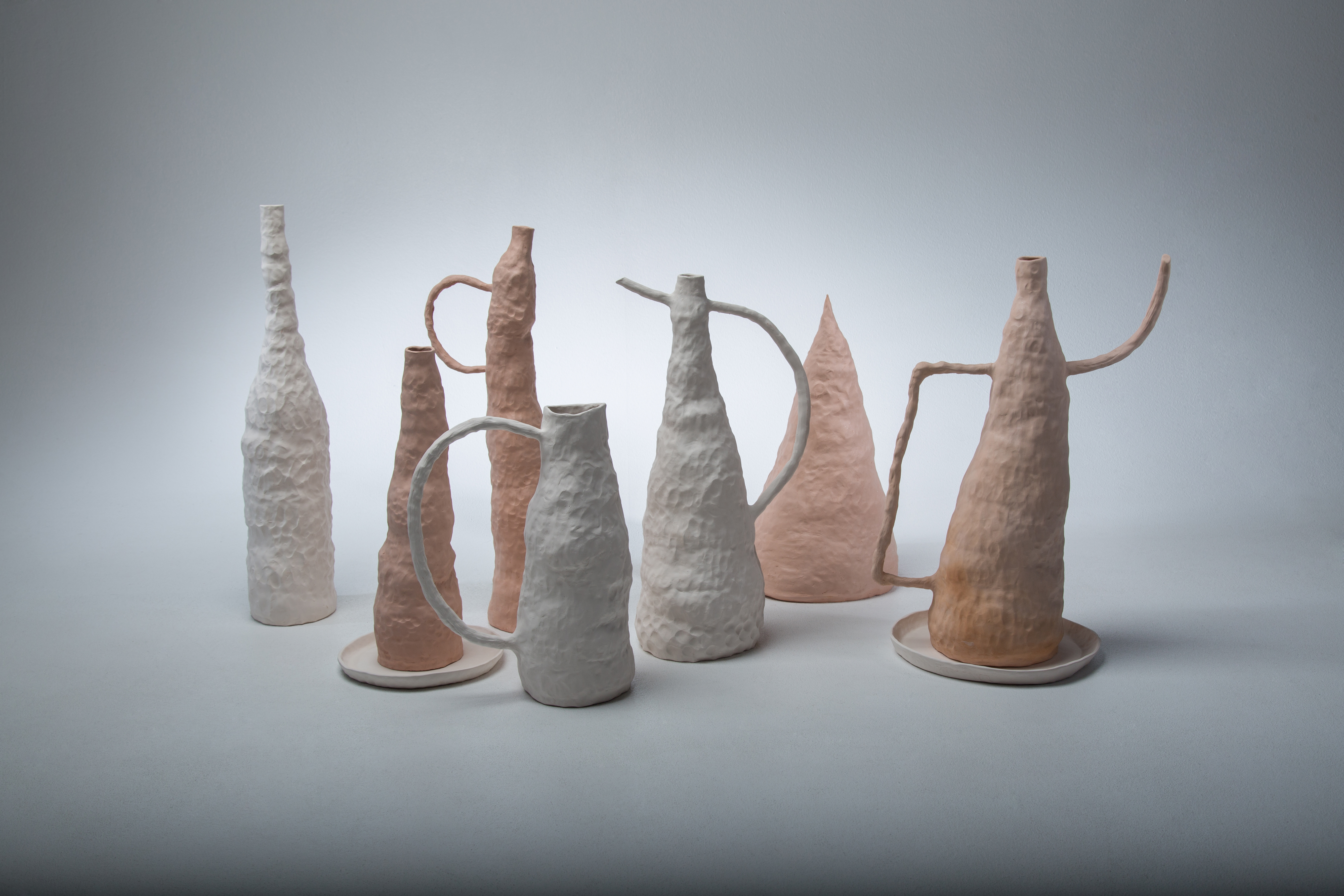


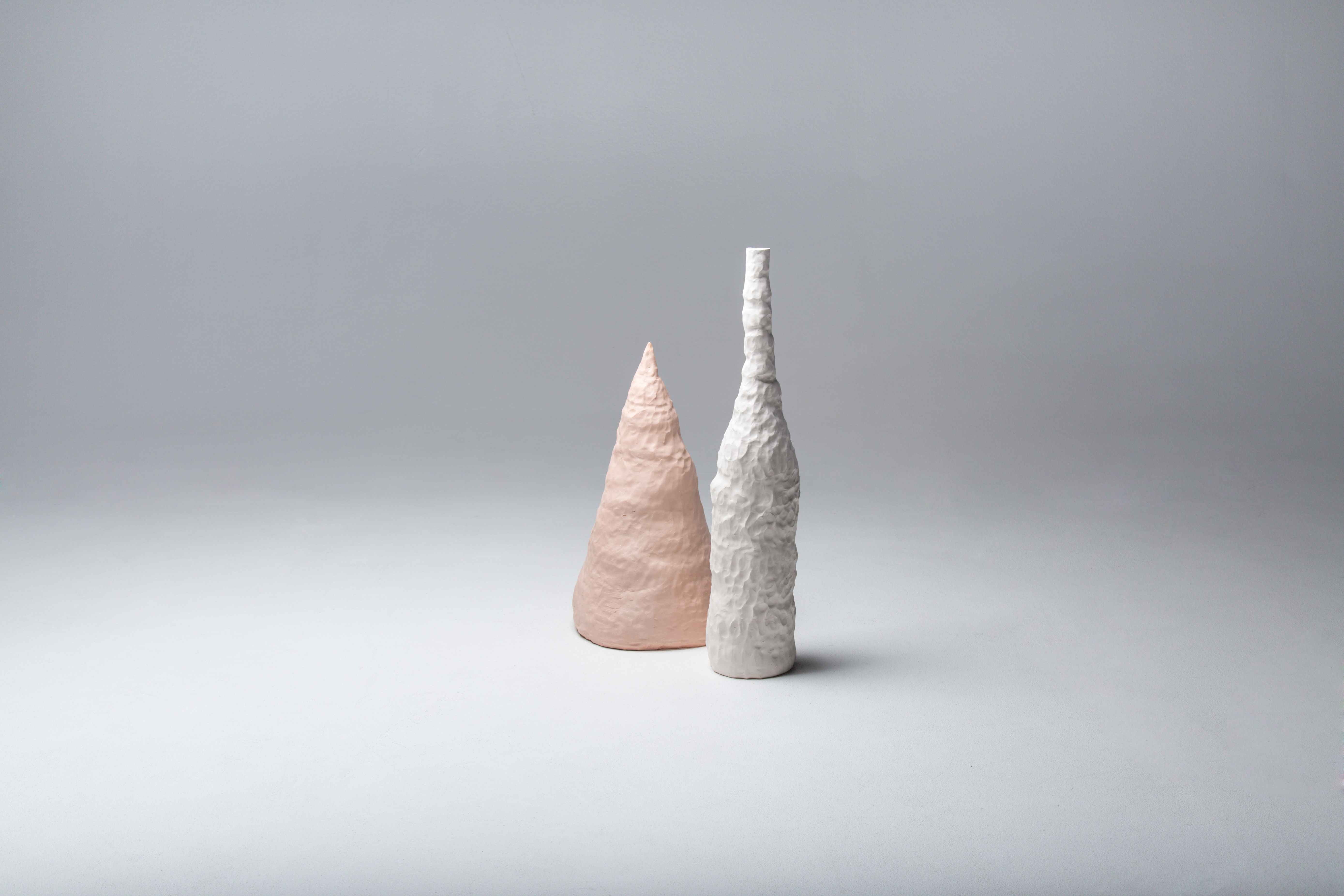


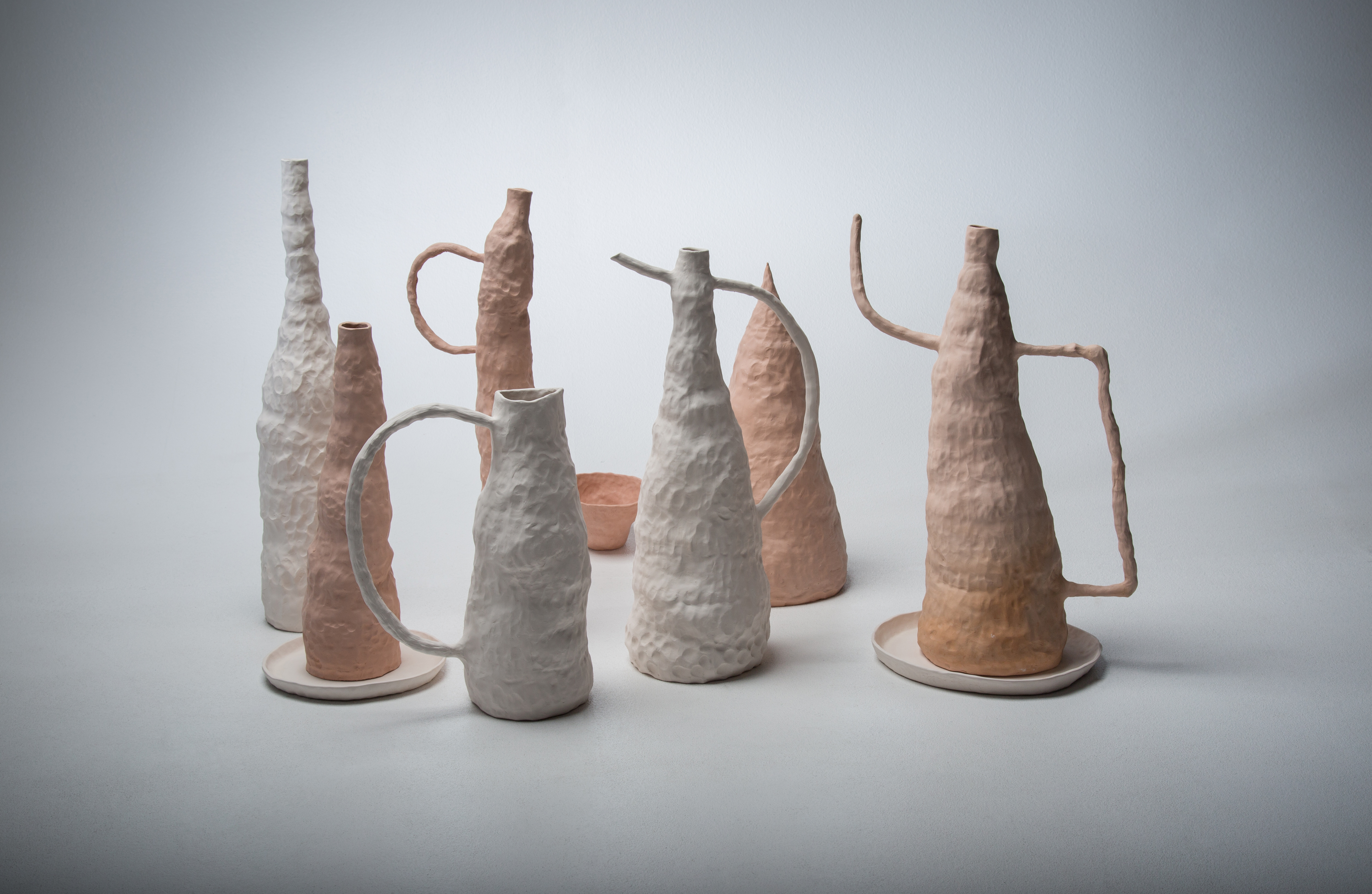

High Tea and Yellow Cake responds to the environmental threat posed by the Olympic Dam uranium mine in Outback Australia. It was inspired by my time with Arabunna elder, Kevin Buzzacott during a blockade against the expansion of the Olympic Dam mine, which sits on the largest known deposit of uranium in the world (locally knowns as “yellow cake”). Uncle Kevin shared with us a dreaming story about a poisonous lizard spirit resting in the earth that holds the uranium poison in his belly, however when he is provoked the poison is vomited onto the land as a defense. The installation uses domestic vessels as epitaphs for sacred hills lost to mining, merging the "yellow cake" of uranium with the iconography ritual objects. By offering an X-ray view of the earth’s hidden interconnections, the pieces challenge us to look beneath the surface and recognise that the earth's mantle maintains our home’s integrity far beyond what the western eye is trained to see. Ultimately, the work serves as a plea to respect the delicate balance of the landscape before its disruption leads to irrevocable catastrophic consequences.